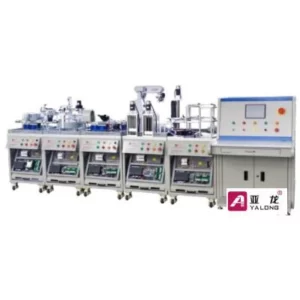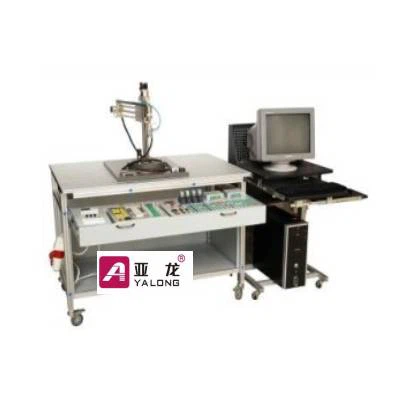
Description
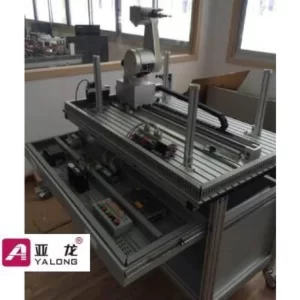
The module is a coordinate manipulator, which can complete rotation of the manipulator, the vertical up and down of the arm, horizontal movement of the arm, the precise location control of the four degrees of freedom rotation of the gripper.
Meanwhile, it is equipped with transistor type PLC to conduct the complex position control of manipulator. The control part of the module should be design using standardized modules,divided into power supply unit, PLC unit, system control unit. It includes the stepper motor drive,mechanical drive, pneumatic, programmable controllers, sensors, and many other technologies involved in the electromechanical integration.
Functional features
1. The manipulator X and Z should equip with high precision ball screw, and high-precision optical rod guides and linear bearings, to ensure the robotic arm can move smoothly and precision position control.
2. Manipulator arm and gripper powers by using decelerate DC motor, with photoelectric sensors and encoder, its enable robot to achieve precise position control on the direction of rotation.
3. Manipulator gripper equips with a high-precision pneumatic gripper. With advanced electromagnetic position switch and two unit of three-way solenoid valve, gripper can perform grasping and releasing action quickly and accurately.
4. The module is designed with build in I/O terminals of PLC module, terminals of the inverter, and connection terminals between PLC and commonly used modules that are all connected through safety socket.
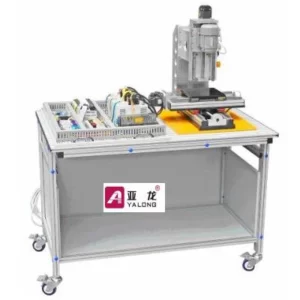
5. The entire module structure builds up with aluminum steel manipulator bench, the vertical axis and the horizontal axis using anodized aluminum, while the sides and the bottom bench using 1mm thickness painted steel, separate between stand and ground using self-locking function wheel, the entire bench is not only durable and easy to move.
6. The Z axis and the X axis manipulator move by ball screw, lead to approx. 4mm; manipulator maximum rotation angle: approx. 270 degrees; manipulator maximum rotation angle: approx. 270 degrees.
List of Experiments
1. Sensor application technical training;
2. Pneumatic application technical training;
3. PLC Programming training;
4. Electrical control circuit training;
5. Automatic control technology teaching and training
6. Installation and commissioning of mechanical systems training;
7. Maintenance and fault detection of systems training.