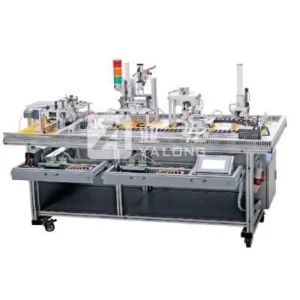
Description
Functional Features
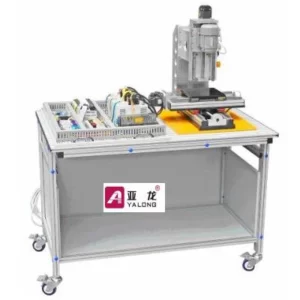
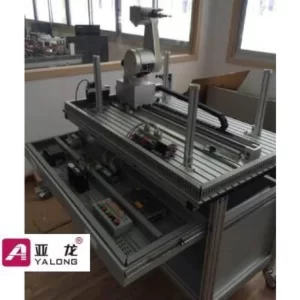
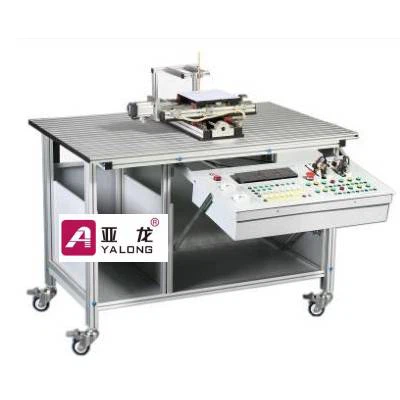
1. This module consists of the base plate, servo motors and servo amplifiers, precision screw drive mechanism, pallets, limit sensor assembly, aluminum rail bracket and PLC control systems and other components.
2. The module uses aluminum alloy rail training platform, and the modules use open structure planar plug-in connection type, with high integrity and intuitive and simple operation.
3. The control mode of the module is able to change according to the actual need, convenient for
teaching and suitable for students to train and do course design.
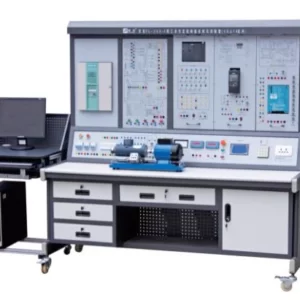
4. This module contains of PLC module, positioning module, servo drive module, control unit, which are all installed in the control cabinet.
5. The module consists of 2 sets of AC servo motor, composing X, Y two-axis positioning device.
6. The X axis and Y axis of the module are perpendicular to each other in the horizontal direction,so that the whole mechanism not only has high-precision positioning capabilities, but also has a complex trajectory running function on a plane.
List of Experiments
- Debugging and applications of positioning module:
1. Integrated application training of positioning module;
2. Integrated application training of servo system;
3. Connection and installation of servo drives and servo motor;
4. Connection and installation of positioning module and servo drives;
5. Positioning module control programming;
6. Servo drive parameter settings
7. Integrated application training of two-dimensional double axis positioning motion control;
8. Compensation technology applications;
9. Complex trajectory control;
- PLC programming training:
1. Pulse control programming;
2. Installation and application of PLC expansion module;
3. Extended module control programming;
4. Servo motor control programming;
5. Dimensional biaxial operation control programming;
6. Single-axis operation control programming.
- X-Y axis installation and commissioning
1. Adjustment of coaxial transmission device;
2. Installation and commissioning of biaxial origin;
3. Installation and commissioning of limit switch;
4. Overall installation and commissioning of both axes;
5. Detection on electrical and mechanical fault exercises;