Description
I. Product introduction
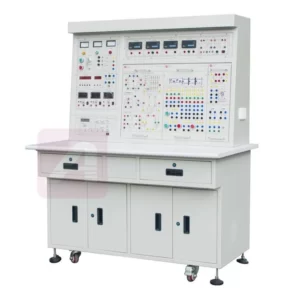
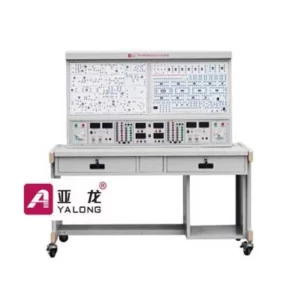
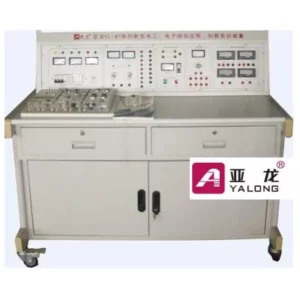
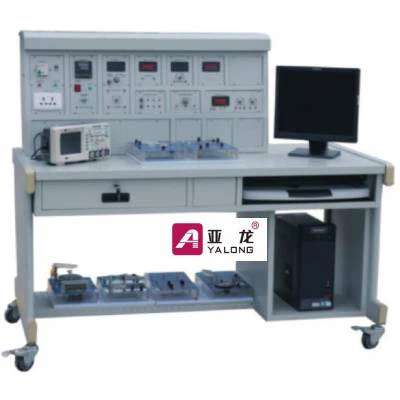
YL-1021A sensor and inspection technology experiment platform is a product we dedicated in R&D for years. Base on sensor technology lecturing experiment devices, we develop this product in order to meet the demand for various sensors, multiple levels of requirements.
Sensor and inspection technology is one of the most important part in modern technology. Sensor is the critical device for data extraction, data conversion, and data processing.
Sensor and inspection technology extract data from nature, society, production process, and scientific experiments, such as pressure, weight, velocity, humidity, and etc.; Via corresponding sensor modules, the collected data can be converted into transferable, visual, and other processible information. The purpose of data processing is to process, calculate, analyze, and integrate the obtained data, in order to display, alarm, predict, measure, protect, control, dispatch, and manage target subjects.
YL-1021A Sensor Technology and Inspection Practical Training Device is not only a practical training device, but also a complex device. The complexity includes its sensor Technology, data processing, electronic technology, SCM technology, and wireless technology theories and skill trainings.
Its advantage is that:
1.It can adopt to different majors, and we also make customized experimental modules.
2.It can adopt to the development trend. As the information extraction tool, sensor development is fast, we can follow up the development and support with new sensor model and experiment modules.
3.Instructor and students can develop new experiments, and we can help with it.
4.User can implement the device for course development, senior design, and self-made device.
YL-1021A Sensor Technology and Inspection Practical Training Device is designed for vocational schools and technical colleges, specifically intended for courses such as Sensor Theory and Technology, Automated Inspection Technology, Non-Electrical Measurement Technology, Industrial Automated Panel and Controls, Parameter Electrical Measurement Mechanical, and etc.
YL-1021A Sensor Technology and Inspection Practical Training Device primarily uses transparent educational sensors for observation purpose, but the structure and wiring is the same as industrial sensors. We hope the experiment can help enhance students’ comprehension of text book knowledge, and in the meanwhile, obtain the skill of data extraction, conversion, and analysis as a scientific worker.
5. Integrate with NI plug-and-go devices, we can use NI LabVIEW to perform graphical programming. Students can use all software to experiment and practice.
II. Practical Training Contents
| Fundamental experiment | AC/DC, full bridge measurement and differential amplification experiment |
| Low pass filter experiment | |
| Phase-shifting experiment | |
| Phase sensitive detector experiment | |
| V/I、I/V、F/V conversion experiment | |
| Strain gauge experiment | Metal foil strain gauge–Wheatstone bridge experiment |
| Metal foil strain gauge–Half bridge performance experiment | |
| Metal foil strain gauge–Full bridge performance experiment | |
| Metal foil strain gauge–Wheatstone bridge, half bridge, and full bridge comparison | |
| Metal foil strain gauge temperature influence experiment | |
| DC full bridge application– Electronic scale experiment | |
| AC full bridge performance experiment | |
| AC excitation frequency influence on full bridge | |
| AC full bridge amplitude measurement experiment | |
| Diffused silicon piezoresistive experiment | Diffused silicon piezoresistive pressure sensor pressure measurement experiment |
| Diffused silicon piezoresistive pressure sensor pressure differential measurement experiment | |
| Capacitive sensor experiment | Capacitive sensor displacement property experiment |
| Eddy current sensor experiment | Eddy current sensor vibration measuring experiment |
| Eddy current sensor displacement property experiment | |
| Eddy current sensor tachometer circuit experiment | |
| Measure subject size influence on eddy current sensor property experiment | |
| Magneto-electric sensor experiment | Magnetoelectric sensor vibration measuring experiment |
| Hall sensor experiment | Hall sensor vibration measuring experiment |
| DC excitation frequency influence on Hall sensor displacement property experiment | |
| AC excitation frequency influence on Hall sensor displacement property experiment | |
| Hall sensor tachometer circuit experiment | |
| Magneto-resistive sensors rotational speed measurement experiment | |
| Piezoelectric transducer sensor experiment | Piezoelectric transducer vibration measuring experiment |
| Differential transformer experiment | Differential transformer application–vibration measuring experiment |
| Differential transformer performance experiment | |
| Excitation frequency influence on differential transformer property experiment | |
| Differential transformer test system calibration | |
| Differential transformer vibration measuring experiment | |
| Differential transformer displacement property experiment | |
| Photoelectric sensor experiment | Photoelectric sensor tachometer circuit experiment |
| Intelligent adjust rotational speed control experiment | |
| Fiber optic sensor experiment | Fiber optic sensor vibration measuring experiment |
| Fiber optic sensor displacement property experiment | |
| Temperature sensor experiment | PN junction temperature sensor thermal property experiment |
| PTC thermistor thermal property experiment | |
| NTC thermistor thermal property experiment | |
| PT100 platinum resistor thermistor thermal property experiment | |
| Cu50 copper resistor thermal property experiment | |
| K, E thermocouple temperature measurement experiment | |
| Integrated AD590 temperature sensor thermal property experiment | |
| Integrated LM35 temperature sensor thermal property experiment | |
| Temperature sensor experiment | Thermocouple cold end temperature compensation experiment |
| Intelligent adjust temperature control experiment | |
| Gas sensor experiment | Gas sensor (alcohol) experiment |
| Gas sensor (flammable gas) experiment | |
| Humidity sensor experiment | Humidity sensor property experiment |
| Photo-electricity experiment | Illumination experiment |
| Photosensitive resistor property experiment | |
| Photosensitive diode property experiment | |
| Photosensitive transistor property experiment | |
| Silicon photocell property experiment | |
| Photo-electricity switch experiment | |
| Acceleration experiment | Duo-axle Acceleration experiment |
| Wireless communication experiment | ZigBee communication experiment |
| Bluetooth communication experiment | |
| Wi-Fi communication experiment | |
| Infrared experiment | Infrared experiment |
| Ultrasonic experiment | Ultrasonic ranging experiment |
III. Equipment Structure
3.1 Sensor module composition
A sensor can convert a measured non-electric quantity into a electric quantity output, thus it has to have a component to “feel” the deviation of the non-electric quantity. However, not all non-electric quantity are convertible to electric quantity, but it might be easier to convert non electric quantity into an intermediate non electric quantity. This function component is call sensitive component (a.k.a. Convector) in a sensor. For example, strain gauge pressure transducer converts pressure signal into voltage signal output, its sensitive component is an elastic diaphragm, it converts the pressure into the deformation of the elastic diaphragm.
The component converts the intermediate non-electric quantity output into electric quantity of the sensitive component in the sensor, is called converter component (or converter). It implements physical, chemical, biological or other effects to achieve this purpose. For example, the converter of strain gauge pressure transducer is a strain gauge, it implements the resistance strain effect (the resistance of metal or semi-conductor is influenced by its magnitude of mechanical deformation), to convert the deformation into the value change of resistance.
Sensitive component is the part that directly “feel” or respond to measured parts; converter converts the “feeling” of sensitive component or response to the measured parts into transmittable and measurable electric signal. Be aware that some measure non-electric quantity can be converted into electric quantity directly. In this case, the sensitive component and converter merges into one component. For example, thermo resistor temperature sensor utilizes platinum resistor (PT100) or copper resistor (Cu50), directly output the measured temperature signal into resistance value.
The output electricity of converter component usually difficult to be shown, recorded, processed nor controlled. In this case, we would like to convert the electricity into electrical signal. The part responsible for this function in sensor is called measuring circuit. Measuring circuit is also called signal regulation and conversion circuit, it converts the sensor component output electrical signal to convenient display, record, process, and control signal. For instance, there is a bridge as measuring circuit in strain gauge pressure transducer, it can convert strain gauge pressure transducer signal into a voltage signal, which can be recorded, and displayed via a magnifier. The choice of measuring circuit accords with converter component type. The common types are bridge circuit, PWM circuit, oscillating circuit, and high impedance input circuit.
In summary, a complete sensor circuit is consisted of 4 parts: sensitive component, converter, measuring circuit, and auxiliary power. Shown as figure below. Among which, the sensitive component and converter can merge to one component, and some sensor does not require auxiliary power.

3.2 Wireless communication sensor network
In many cases, sensors are supposed to be placed in target location for data collection, thus wireless transmission capability is mandatory for these sensors.
This device is equipped with 3 wireless communication modules: Zigbee, Bluetooth, and Wi-Fi. It can respond to corresponding sensor wireless communication network.
Sensor wireless communication network is primarily composed of AD converter, transmission component, receiving component, and host computer. System structure shown in the figure below:

3.2 Wireless communication sensor network Structure
3.3 Senors and NI data collection
In order to combine simulation, measurement, and mechatronics and practical training operation, Yalong integrated LabView version of educational sensor package. For students, it has adequate functional and practical product with low price. Student can also develop customized LabVIEW host software according to given NI data collection board themselves.
Sensor module and NI data collection can use the structure shown in the following figure.

Figure 3.3 Sensor module and NI data collection structure
3.4 The safety and practical sensor test platform
A. The experiment power supply is equipped with leakage protection and fuse protect, DC power source has shortage protection, which can also display the status. Experiment wire is elastic connection, small resistance.
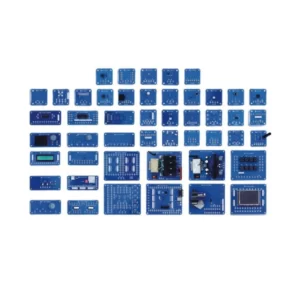
B. Sensor processing circuit adopts modulized design. Experiment subject can be extended according to customer demand.
C. Sensor structure is close to industrial inspection sensor, high accuracy, which can better simulate real case application, and more convenient for PC to analyze experiment property and control.
D. The whole package includes sensor, measurement panel, special power supply, thermo, gas source, vibration, rotation generator, and data collection controller, as well as the connection wires. The performance and accuracy all match the experiment and meet the requirement.
E. The sensors are designed transparent, for students to observe the internal structures, helping student comprehend. There printed schematic diagram on the front of sensor and conversion circuit modules, which can help the comprehension of electronic principles of the experiment.
About Packing&Shipping